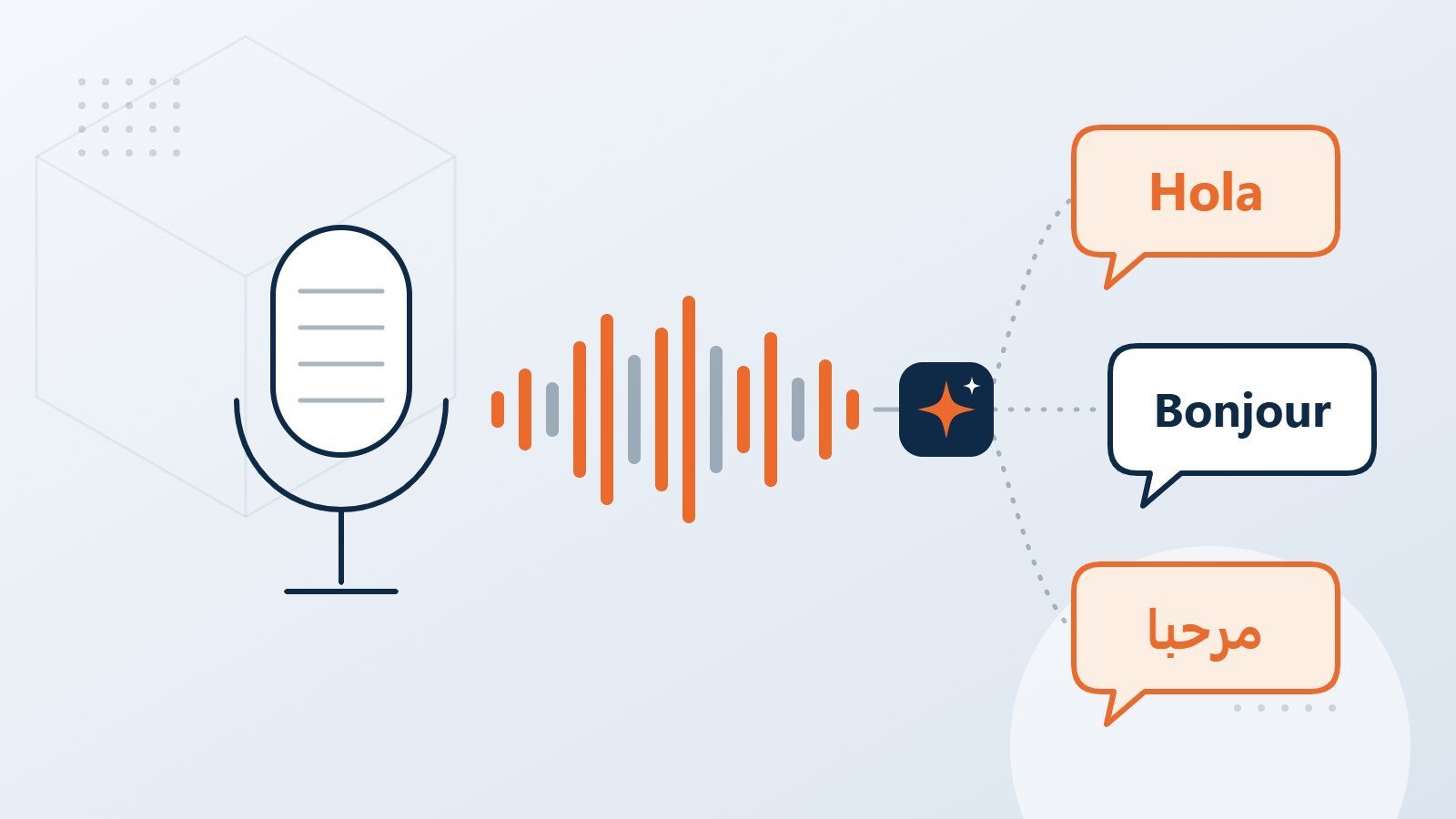
AI voice-over and machine translation are a good fit for eLearning that changes often, has a tight deadline, or needs many languages, as long as a person reviews the output. For high-stakes, regulated, or brand-critical courses, native voice artists and professional translators are still the safer choice.
How common are AI voice and translation in L&D?
Very common, and growing. In Synthesia's AI in Learning & Development Report 2026 (421 L&D professionals, surveyed in late 2025), voice generation was the most popular AI use case at 63%, and 38% were using AI for translation or localization. Accuracy was a top concern for 52% of respondents, which matches what we see in practice: the tools are useful, but they need checking.
When does AI voice-over work well?
- Courses that are updated often, such as product or system training, where re-recording a human voice every time would slow updates down
- Internal or short-lived content, such as announcements and refresher modules
- Prototypes and pilots, to test timing and flow before recording the final voice
- Rollouts in many languages where a fast, consistent voice matters more than performance
When should you choose a human voice artist?
- Scenario-based and soft skills training, where tone, empathy, and acting carry the message
- Customer-facing and brand-critical courses
- Medical, pharmaceutical, and technical content with many specialist terms
- Languages where AI voices are less mature or sound less natural
Even good AI voices still mispronounce product names, acronyms, and technical terms. No one should promise perfect pronunciation from an AI voice. That is why every AI narration we deliver is checked by a person, with a pronunciation list prepared for the course.
Machine translation or human translation?
There are three common options, and the right one depends on the content and the risk:
| Approach | Best for | Watch out for |
|---|---|---|
| Raw machine translation | Internal drafts and getting the gist of a document | Errors, inconsistent terms, and awkward phrasing; not suitable for published training |
| Machine translation + professional post-editing | Large volumes of factual content with standard terminology | Needs qualified post-editors and a glossary; saves most on clear, repetitive text |
| Full human translation | Regulated, safety-critical, persuasive, or culturally sensitive content | Takes longer, but gives the most control over accuracy and tone |
Post-editing is a professional discipline in its own right, with its own international standard, ISO 18587. Localize a2z, the company EdTech Cube belongs to, is certified to ISO 18587 for machine translation post-editing and to ISO 17100 for translation services.
How do you keep quality high when using AI?
- Classify the content. Decide which modules can use AI and which need human voice or translation.
- Prepare a glossary and pronunciation list. Product names, acronyms, and key terms, agreed before production.
- Finalize the source script. Clean, simple source text translates and voices far better.
- Post-edit with qualified linguists. Machine output is corrected for meaning, terminology, and style, not just grammar.
- Review in context. Listen to the narration with the animation and read the text on screen, in every language.
- Test the final build. Check audio sync, layout, and LMS tracking for each language version.
Frequently asked questions
Do learners notice AI voices?
Many modern AI voices sound natural in short narration. Differences show more in longer, emotional, or conversational content, which is where human voice artists make the biggest difference.
Is machine translation safe for compliance training?
Only with professional post-editing and review, and for some regulated content we recommend full human translation. The risk of a mistranslated instruction is usually higher than the time saved.
Can we mix human and AI voices in one program?
Yes. A common approach is human voices for scenarios and key modules, and AI voices for frequently updated reference sections.
Can you work with our existing translation memory and glossary?
Yes. Reusing your approved terminology keeps new courses consistent with the rest of your content.
Learn more about our eLearning localization service, or read our guide to translating a course properly.
Ready to talk about your course?
Tell us what you have and who needs to learn it, and we will suggest the simplest route to a course that works. Book a 20-minute scoping call.