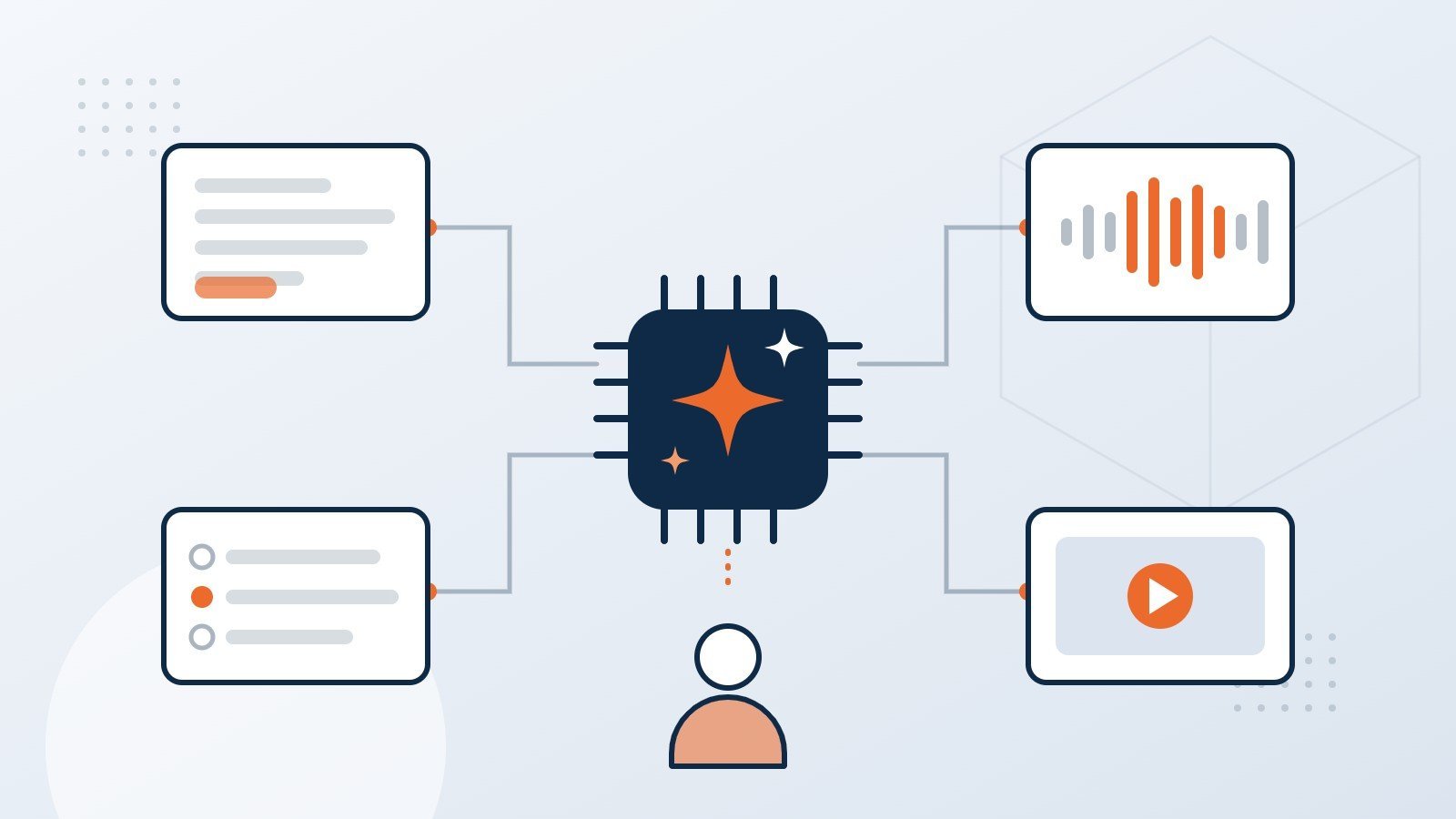
AI is changing eLearning development mainly by speeding up first drafts: outlines, quiz questions, narration, video, and translation. It does not replace the judgment that makes a course work – understanding the learners, choosing what matters, checking accuracy, and designing practice that changes behavior.
How widely are learning teams using AI?
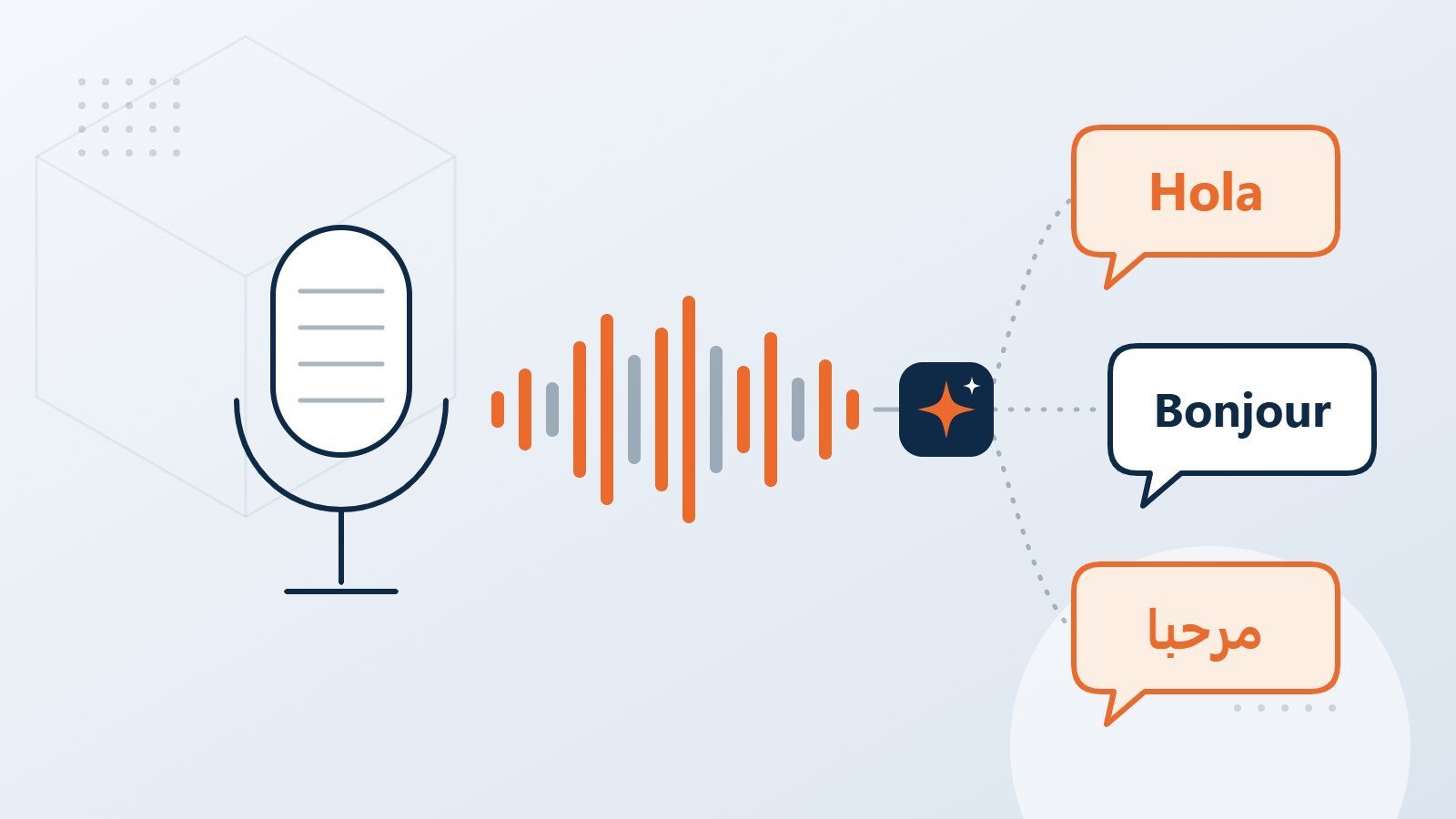
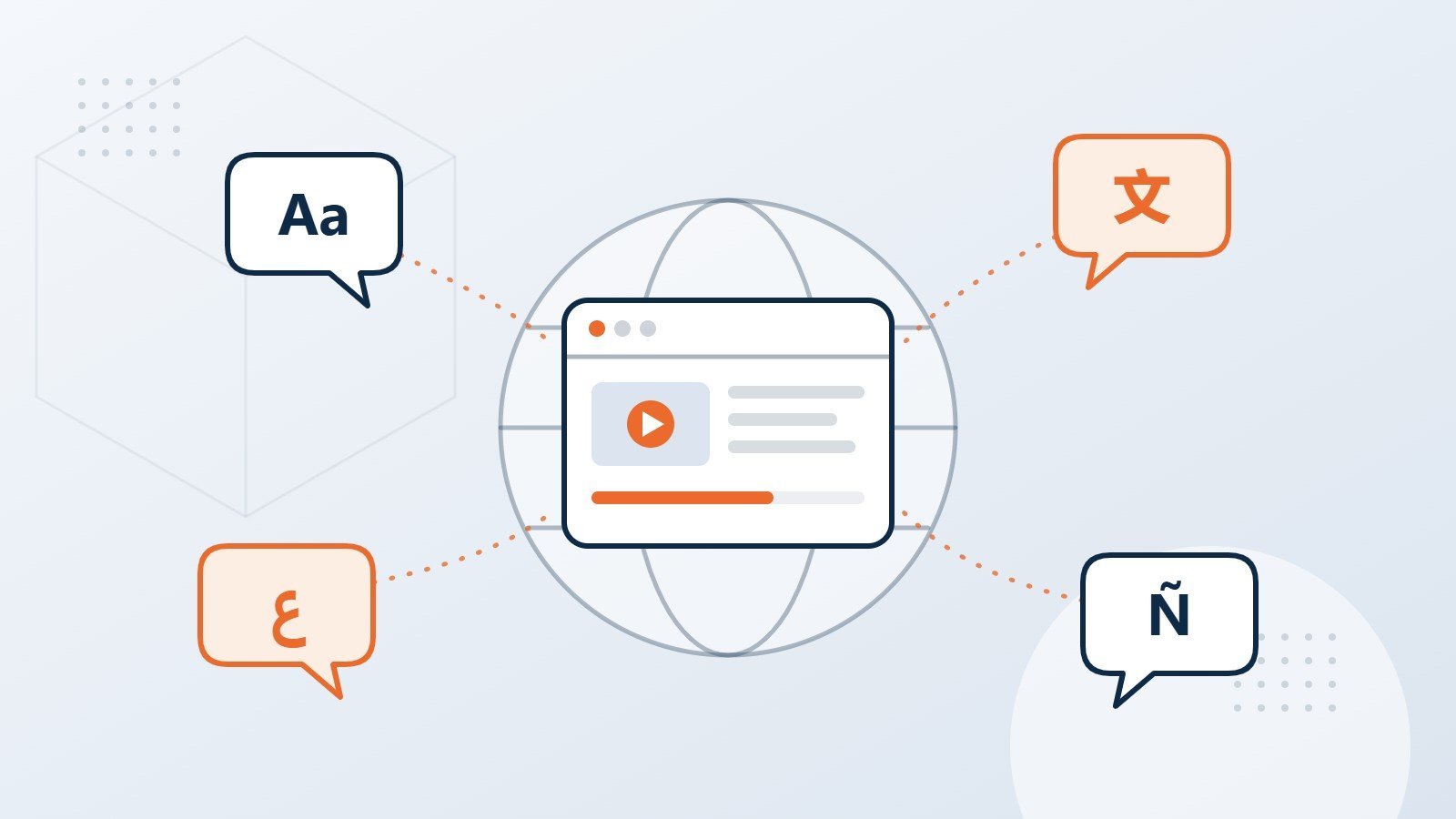
Adoption is already high. In Synthesia's AI in Learning & Development Report 2026, based on a survey of 421 L&D professionals in late 2025, 87% said they currently use AI tools. The most common uses were voice generation (63%), content and quiz drafting (60%), video creation (52%), and translation or localization (38%).
The same survey shows the hesitation. Security (58%) and accuracy (52%) were the top concerns. The sample leaned toward large organizations and early adopters, so the real picture across all companies is likely more mixed. The direction, though, is clear.
Where does AI help most in course development?
| Stage | How AI helps | What a person still does |
|---|---|---|
| Research and outline | Summarizes long source documents and suggests a structure | Decides what learners actually need and cuts the rest |
| Storyboard writing | Drafts on-screen text and narration quickly | Edits for accuracy, tone, and reading level |
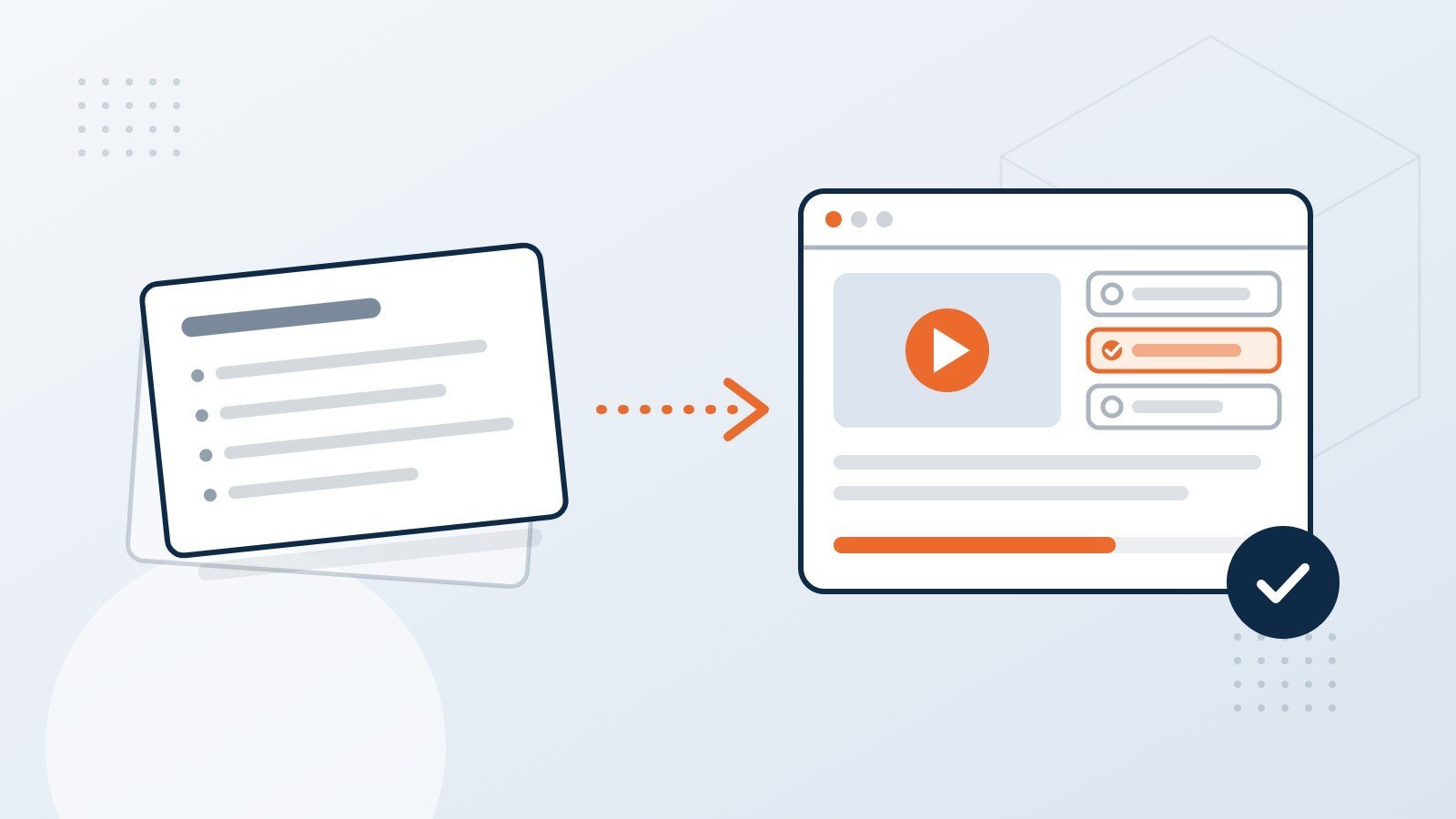
| Assessments | Generates a first set of questions and distractors | Checks each question tests the objective, not trivia |
| Voice-over | Produces natural-sounding narration in minutes | Reviews pronunciation, emphasis, and technical terms |
| Images and video | Creates illustrations, avatars, and simple video | Keeps the style consistent and checks for errors |
| Translation | Produces a fast first draft in many languages | Post-edits and reviews the course in context |
Where does AI fall short?
- Accuracy. AI can state wrong information confidently. In compliance, medical, and technical training, every fact needs checking by someone who knows the subject.
- Context. AI does not know your culture, your systems, or why people make the mistakes the course is meant to fix. Good scenarios come from that knowledge.
- Learning design. Choosing the right practice activity for a skill is a design decision. AI can suggest formats, but it cannot see whether they will work for your learners.
- Consistency. Generated text, voices, and images vary. Without review, a course can drift in tone and terminology from screen to screen.
- Data security. Pasting confidential material into public AI tools can create risk. Teams need clear rules on which tools are allowed and what they may process.
How do we use AI at EdTech Cube?
We offer both human-made and AI-assisted production, and the client decides which. When AI is used, it speeds up drafting, narration, and first-pass translation, and our instructional designers, reviewers, and QA specialists check everything before it reaches you. The process stays the same: learning objectives, storyboard approval, prototype, and tested builds. Only the speed of some steps changes.
For AI voice, a person always reviews pronunciation, because synthetic voices still stumble on product names, acronyms, and technical terms.
What should L&D teams do now?
- Start with low-risk content. Internal updates and refresher modules are good places to learn what AI does well.
- Set review rules. Decide who checks AI output, and against which sources, before anything is published.
- Agree on approved tools. Involve IT and legal early, especially for confidential or regulated material.
- Measure what matters. Track production time, but also completion, assessment results, and on-the-job performance.
- Keep people in the loop. Use the time AI saves on drafting to invest in better scenarios and practice.
Frequently asked questions
Will AI replace instructional designers?
It is changing the job more than removing it. Drafting takes less time, while analysis, design, and quality review matter more, because someone has to make sure fast content is also correct and effective.
Is AI-generated training content accurate?
Not reliably on its own. It needs review by a subject matter expert, especially for compliance, safety, and medical topics.
Can AI make eLearning cheaper?
It can reduce the time some production steps take. The overall effect depends on the content, the level of review needed, and the quality standard you set.
Can we choose not to use AI in our course?
Yes. We build fully human-made courses when clients prefer, for example for sensitive or highly regulated content.
See how we build custom eLearning, or read about using AI voice-over and machine translation.
Ready to talk about your course?
Tell us what you have and who needs to learn it, and we will suggest the simplest route to a course that works. Book a 20-minute scoping call.